Bill 30 (The Inter-jurisdictional Support Orders Amendment Act, 2025)
Second Reading
From Hansard (5 November 2025)
To view this section on video, click here and start play at 2:38:55 PM.
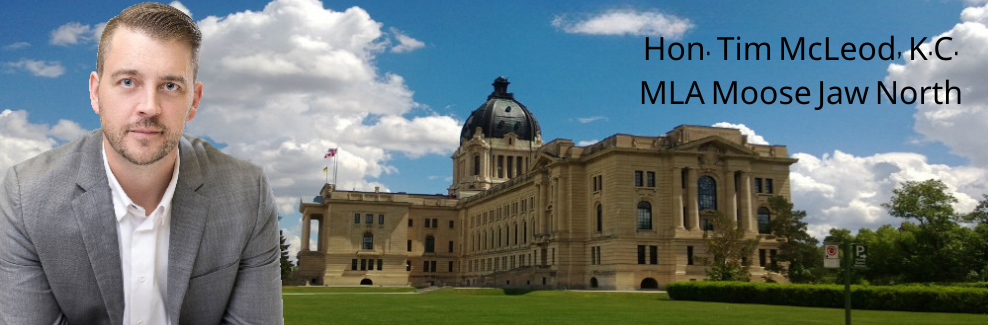
Hon. Tim McLeod: — Thank you very much, Mr. Speaker. I rise today to move second reading of The Inter-jurisdictional Support Orders Amendment Act, 2025.
Mr. Speaker, Saskatchewan parents seeking to obtain, vary, or enforce child support orders should be able to benefit from all available legal avenues. The primary change to the legislation is the addition of the 2007 Hague Convention on Maintenance.
Since 2003, in support order situations where one parent lives outside Saskatchewan, they have been able to rely on the provisions of The Inter-jurisdictional Support Orders Act. This Act establishes a procedure for obtaining, varying, or enforcing a support order where one parent lives in Saskatchewan and the other parent lives in another Canadian jurisdiction.
The Act also applies in 25 other reciprocating jurisdictions as designated within the regulations, Mr. Speaker. However the last time a new reciprocating jurisdiction was added to the list was 2007. Mr. Speaker, since 2007, 56 countries have adopted the Hague Convention to simplify obtaining, varying, or enforcing child support orders where parents live in different countries. With the introduction of the 2007 Hague Convention, many signatories to that convention have declined to enter into reciprocal agreements under The Inter-jurisdictional Support Orders Act.
Many Saskatchewan families have connections to more than one country. In many of those countries the Hague Convention applies, but the inter-jurisdictional support order process does not. By adopting the 2007 Hague Convention on Maintenance, we will expand the options available to Saskatchewan parents to obtain, enforce, or vary child support orders. This will ensure Saskatchewan parents have multiple options to ensure support for their children.
Mr. Speaker, the proposed amendments will not change the existing support order process for countries that are not covered by the Hague Convention. That process will continue to operate where one parent lives in Saskatchewan and the other lives in another Canadian province or one of the 25 reciprocating jurisdictions that has an agreement in place with Saskatchewan.
Mr. Speaker, I am pleased to move second reading of The Inter-jurisdictional Support Orders Amendment Act, 2025.
Standing Committee on Intergovernmental Affairs and Justice
From Hansard (10 March 2026)
To view this section on video, click here and start play at 4:32:35 PM.
Clause 1
Chair B. McLeod: — Now today’s main focus of business is consideration of two bills. And we’ll first consider Bill No. 30, The Inter-jurisdictional Support Orders Amendment Act, 2025, which is a bilingual bill, which just means I have to double up on signatures and initials today, so it takes me a little longer. And we are going to begin with the consideration of clause 1, short title.
Now Minister McLeod is here with his officials, and I would ask that officials please introduce themselves before they speak for the very first time. And I ask not to touch the microphones; it drives the Hansard operator a little bit crazy in the ears. So he’ll turn them on for you when you speak.
So, Minister, I’d ask you to please introduce your officials and provide us with your opening comments, please.
Hon. Tim McLeod: — Well thank you very much, Mr. Chair, and good evening to the committee members. Joining me at the table is, to my left, Maria Markatos, K.C. [King’s Counsel], director of legislative services branch; and to my right, Kim Newsham, K.C., senior Crown counsel, family justice services.
Mr. Chair, I’m pleased to offer some opening remarks concerning Bill 30, The Inter-jurisdictional Support Orders Amendment Act, 2025. The primary change brought forward by these amendments is the addition of the 2007 Hague Convention on Maintenance to The Inter-jurisdictional Support Orders Act, which I will refer to as the ISO Act.
The proposed amendments will not change the existing ISO process, but will add another mechanism for obtaining, varying, and enforcing support orders where parents live in different countries. With the introduction of the 2007 Hague Convention, many signatories to that convention have declined to enter into a reciprocal agreement under the ISO Act.
Since 2007, 56 countries have adopted the Hague Convention. Saskatchewan parents currently have no ability to obtain, vary, or enforce orders where the other parent lives in one of most of those 56 countries. Many Saskatchewan families have connections to more than one country, and in many of those countries the Hague Convention applies, and not the reciprocal enforcement provisions that currently exist in the ISO Act.
The reciprocal provisions in the inter-jurisdictional support order apply in 23 other jurisdictions not subject to the Hague Convention and will be available to parents where applicable. With the adoption of the Hague Convention, the options available to Saskatchewan parents to obtain, vary, or enforce a support order will be expanded to include additional countries.
Mr. Chair, with those remarks I welcome questions respecting Bill 30, The Inter-jurisdictional Support Orders Amendment Act, 2025.
Chair B. McLeod: — Thank you for your comments, Minister McLeod. I will now open the floor to questions. And I recognize MLA [Member of the Legislative Assembly] Nicole Sarauer.
Nicole Sarauer: — Thank you, Mr. Chair, and thank you, Minister, for your opening remarks. Very happy to see this bill come forward. I just have a few questions for yourself and your officials in relation to this bill.
First of all, for the committee’s understanding, could you provide a background on the Hague Convention and why it was signed, and how it’s been operating to date?
Kim Newsham: — Hi. Kim Newsham, Crown counsel with family justice services branch. The Hague Convention on Maintenance came into effect after several years of negotiations between countries where there were often difficulties because of different legal systems having any ability for an order, once made, to be enforced or recognized in another country. And often that left a parent in one country without any significant or even insignificant remedy for providing support for their children. So Canada was heavily involved in the negotiations of this convention, and Canada has actually ratified the convention. Three provinces have currently signed the convention, and it’s in force, in effect.
Nicole Sarauer: — Thank you. When this bill passes, practically speaking how can an individual who feels like their situation may be applicable to this be able to access this as a remedy?
Kim Newsham: — Thank you for the question. It’s a good one. The Hague Convention contemplates there being assistance to parents. The primary way that assistance is provided is through the creation of a central authority.
Central authority under the convention is going to be the same folks that we currently have as our designated authority under the ISO legislation. So it’s some officials that are able to respond to questions, provide information to people, and they will help people making sure that an application has been completed before it gets transmitted to the other country. And similarly if it’s an application from another country, they would review those applications coming from another country and take care of service on individuals here and getting a court date established.
So the intent is that somebody could completely self-represent themselves with the applications here. I also should add too, with the establishment of our child support service which can recalculate and calculate support, the Hague Convention is broad enough to include decisions that are created by our child support service as well. So again, people would not necessarily need to have a lawyer in order to access those services.
Nicole Sarauer: — Could you explain to the committee who those designated representatives would be? Who can the public contact?
Kim Newsham: — So we have an ISO unit within the maintenance enforcement office. So it has a 1-800 number and a designated email address, but people can contact that line. It’s office hours, Monday through Friday. There are four individuals in the ISO unit that process those applications.
Nicole Sarauer: — Thank you. And I think that answers the question that I had, which was around article 15, which requires free legal assistance for child support applications to be provided by the requested state. Can you explain how the ministry intends to meet that obligation?
Kim Newsham: — Primarily through our ISO unit. The ISO unit works fairly closely with our Family Law Information Centre as well. So we do contemplate if people have further questions about what happens when it goes to court. They can contact the Family Law Information Centre as well.
Again the intent of this process and having the Hague Convention in place is to have an easier ability to apply to the court so that people can and do apply to the court without the assistance of a lawyer.
Currently ISO applications are handled without the assistance of any lawyer, so the process is simple enough. And the forms are standardized so that people can complete them and represent themselves in court. So we anticipate that the Hague Convention applications would operate similarly.
Nicole Sarauer: — Thank you. Does the ministry have any estimate of how many people in the province this new legislation will be able to assist?
Kim Newsham: — So we have approximately 60 files right now that involve another country. Most of those will be with the United States, and that would carry over once the Hague Convention is in force. So we know that there’d be at least 120 folks that would be affected by the Convention.
In terms of us now having relationships with more countries, that is a harder number to estimate. Certainly the ministry hears from folks from time to time, for example, from the Philippines. We had a request from somebody that was from Russia recently. The newer people that don’t currently have a remedy, it’s a little bit harder to estimate.
But when we discussed implementation of the Hague Convention with colleagues in British Columbia and Manitoba and Ontario, they’ve all indicated that they had marginal increases in applicants, but it’s not been a huge increase. So it’s more of an incremental increase in people that are being affected by it and come to us for assistance.
Nicole Sarauer: — Thank you. As you just indicated, there are three other provinces who have passed legislation similar. Could you explain why the other provinces have yet to jump on board?
Kim Newsham: — I think it’s primarily just a question of resources. As you probably can appreciate, any of these Hague Conventions are fairly complex to analyze, and then you need to carry on with the implementation plans and determine what legislation . . . or how you’re going to implement the legislation. I think from discussions we’ve had with colleagues, most other provinces and territories intend to implement the convention. Again it’s a question of allocating resources internally to devote to developing an implementation plan.
Nicole Sarauer: — Thank you. Was there any consultation that was required with the outside community, legal or otherwise, with respect to this bill? And if so, who was consulted?
Kim Newsham: — So prior to Canada ratifying the Convention, the Canadian government did conduct a series of consultations with other entities. For example, any First Nations that had a self-government agreement were notified and asked to provide any feedback they had on the Convention. The federal government has conducted a number of consultations — for example, with the national branch of CBA [Canadian Bar Association] — and have also consulted with public guardians and trustees as well for thoughts.
Within Saskatchewan we haven’t conducted any specific consultations, but again this is very similar in operation to ISO and we don’t have any concerns with how ISO is operating currently.
Nicole Sarauer: — Thank you. The only other question I had was specific to section 19. The old subsection (2) allows “a party to the foreign order . . . [to] apply to the court to set aside the registration of the foreign order.” New subsection (2.1) prohibits a party to a foreign order from applying to the court to set aside the registration of that order if the order was already registered by a court. Can you speak to that change in language?
Maria Markatos: — I’m Maria Markatos, director of legislative services, Ministry of Justice. This was something that BC [British Columbia] added to their ISO application process. And it doesn’t change existing subsection (2) but adds a new (2.1), and it only applies to foreign orders from reciprocating jurisdictions only. So it doesn’t affect any of the convention applications. So you can’t apply to set aside an order if it’s already registered in another jurisdiction in Canada and it hasn’t been set aside. So it’s just trying to avoid that forum shopping.
Nicole Sarauer: — And that would be why BC would’ve added that and therefore why Saskatchewan is adding it? Thank you. No further questions.
Chair B. McLeod: — Thank you. Thank you. Seeing no more questions, we’ll proceed to vote on the clauses. And thank you for that question and answer. There was some really, really good information there that came to the table. So I appreciate that so much. All right. Getting myself ready here.
Voting on the clauses. Clause 1, short title, is that agreed?
Some Hon. Members: — Agreed.
Chair B. McLeod: — Carried.
[Clause 1 agreed to.]
[Clauses 2 to 13 inclusive agreed to.]
Chair B. McLeod: — I’m very thankful that I didn’t have to read the entire bill.
His Majesty, by and with the advice and consent of the Legislative Assembly of Saskatchewan, enacts as follows: The Inter-jurisdictional Support Orders Amendment Act, 2025, a bilingual bill.
I would ask a member to move that we report Bill No. 30, The Inter-jurisdictional Support Orders Amendment Act, 2025, a bilingual bill, without amendment. MLA Martens moves. Is that agreed?
Some Hon. Members: — Agreed.
Chair B. McLeod: — Carried. Any closing comments by the minister?
Hon. Tim McLeod: — I would just very much like to thank Ms. Markatos and Ms. Newsham, who I am blessed to work alongside every day. They are clearly very well versed in this. I think they may have abandoned the table at this point, but they were certainly a great support here this evening, and I would thank them for their participation in the committee.
Chair B. McLeod: — Any closing comments from members?
Nicole Sarauer: — I would like to join with the minister in thanking in particular Ms. Markatos and Ms. Newsham, who served the committee very well this evening.
Chair B. McLeod: — Yes, we were well served, well served today. Good. So we’ve already switched out the officials in that regard. And welcome. And I appreciate them paying attention to that and moving us through in good time today.
Back to 2025/2026 Session

Constituency Office
Constituency Assistant: Jacqui Stephens
200 – 99 Diefenbaker Drive
Moose Jaw, SK S6J 0C
Telephone: (306)-692-8884
Fax: (306)-693-3251
Email: mjnorthmla@sasktel.net
Hours of Operation:
Monday to Friday from 8:30 to 12:00 and 12:30 to 4:00